The Spatial Challenge: The Utility Dilemma in High-End Masterplans
Luxury masterplanned developments across Saudi Arabia face a silent threat to their economic viability and aesthetic integrity: the spatial integration of essential utility infrastructure. High-voltage substations regulated by the Saudi Electricity Company (SEC) and water pump stations managed by the National Water Company (NWC) are critical for operations, yet they are frequently treated as isolated, fenced-off utilities. This traditional approach creates visual and spatial dead zones that severely depress the value of adjacent premium real estate.
Leaving massive, unprogrammed buffer zones around these utilities not only wastes valuable Gross Floor Area (GFA) but also damages the overall placemaking quality. High-end buyers demand pristine visual corridors, acoustic comfort, and seamless urban connectivity. A stark, industrial-looking utility compound directly adjacent to a luxury villa or premium commercial strip immediately signals a compromise in quality, eroding the developer's premium pricing power.
The Hidden Cost of Passive Buffering and Conventional Setbacks
Conventional development practices rely on passive buffering—pushing utility structures behind massive setbacks or hiding them behind high, blank concrete walls. This passive approach does not solve the problem; it exacerbates it. These neglected buffer zones quickly turn into dusty, unmonitored voids that disrupt the urban fabric and signal poor planning to prospective investors and residents.
Financially, sacrificing prime land to oversized setbacks represents a direct loss of potential revenue. Furthermore, the plots bordering these stark concrete walls suffer from a severe discount, forcing developers to lower their asking prices to clear inventory. This price disparity within the masterplan is an avoidable financial leak that can be prevented by shifting from passive isolation to active spatial integration.
Navigating Saudi Regulatory Realities and Technical Constraints
Successful infrastructure integration in Saudi Arabia requires navigating strict technical mandates from utility providers. The Saudi Electricity Company (SEC), for instance, enforces rigid requirements for heavy maintenance vehicle access, transformer ventilation, safety clearances, and fire separation. Developers cannot simply screen these structures without fully complying with these regulations, as non-compliance leads to costly delays in utility handovers and project licensing.
The strategic objective is to design integration solutions that treat these technical mandates as baseline parameters rather than design limitations. This requires early-stage collaboration between infrastructure engineers and urban designers. By doing so, maintenance access routes can be seamlessly woven into the public right-of-way, and ventilation requirements can be met without compromising the visual and acoustic harmony of the surrounding neighborhood.
Strategic Solutions: Architectural Camouflage and Active Placemaking
Effective solutions begin by redefining the building envelope of the utility structure. Instead of standard concrete blockwork, developers can utilize double-skin facades engineered from high-performance materials. These systems facilitate natural ventilation for heat dissipation while providing superior acoustic dampening. Visually, they can be designed to match the architectural language of the luxury masterplan, transforming a utility box into a sophisticated design feature that lights up elegantly at night.
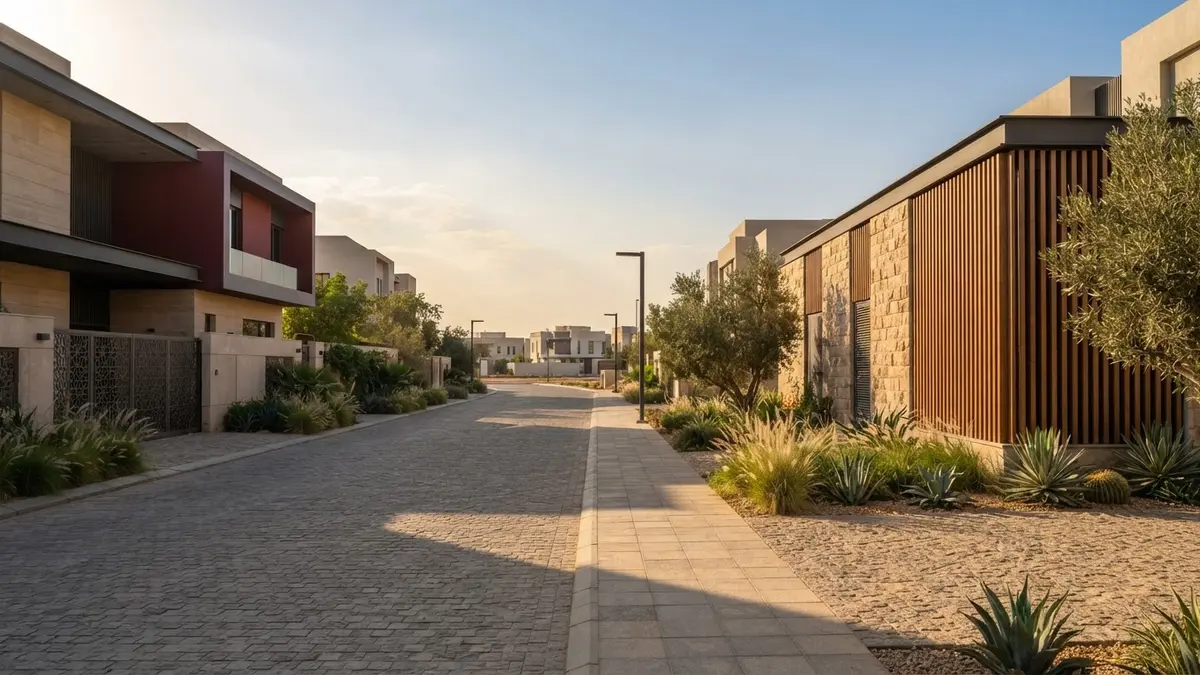
Beyond architectural camouflage, the surrounding setbacks must be programmed as active community assets. Mandatory buffer zones can be redesigned as lush pocket parks, shaded jogging paths, or vertical green walls that act as natural sound barriers and air filters. By embedding utility plots within highly programmed landscape features, the infrastructure becomes invisible to the resident, replaced instead by an active, safe, and inviting public realm.
The Financial Impact: Protecting Asset Value and Optimizing Land Use
Investing in sophisticated utility integration yields direct, measurable financial returns for master developers. First, by optimizing setbacks and converting them into functional green corridors or pedestrian links, developers maximize sellable land efficiency. Second, this proactive approach eliminates the steep price discounts typically associated with plots adjacent to utility sites, maintaining price consistency and protecting the overall valuation of the development.
Real estate feasibility metrics consistently show that masterplans incorporating integrated infrastructure and thoughtful placemaking achieve faster absorption rates and higher premium margins. High-net-worth buyers are willing to pay full market value for plots adjacent to integrated utilities when they perceive zero visual or acoustic intrusion, feeling confident that the developer has curated every square meter of the environment.
Assessing Your Readiness and Next Steps with Asred
If you are a Saudi developer or investor preparing to launch a premium residential or commercial masterplan, evaluating your utility integration strategy early is critical. Postponing these spatial decisions to later design stages or after regulatory approvals makes modifications highly expensive and legally complex, forcing you to accept conventional layouts that permanently devalue your adjacent land parcels.
At Asred, we bridge commercial clarity with advanced spatial design and deep Saudi cultural context. We specialize in auditing masterplans to identify utility integration gaps, delivering bespoke architectural and placemaking solutions that protect your asset values and optimize land efficiency. Contact our advisory team today to schedule a technical masterplan audit and unlock the hidden value of your development.