
1. A phase is not a construction timetable; it is an investment and operating decision
Many masterplans begin with a quantum question: how much residential, office, retail or hospitality area can the site accommodate? Phasing should begin elsewhere: what is the smallest package of assets and infrastructure that can create a genuine reason to visit, produce revenue and reduce reliance on funding for the next phase? Phase one is not a reduced-scale version of the final scheme. It is an independent product with a clear audience, a legible arrival sequence, a comfortable experience and an operating model that can be managed.
In Saudi Arabia, demand cycles for homes, offices, hospitality, retail and leisure vary by city, corridor and site conditions. A familiar sequencing formula from another project is not a strategy. Separate the elements required for a credible opening from those that can wait without damaging value. This includes internal access, parking, shade, landscape, utilities, entry connections and gathering spaces. A missing component can turn a promising launch into an incomplete experience that consumes marketing spend without generating sufficient repeat use.
2. Map demand and revenue before drawing phase boundaries
The first practical step is a decision map for every proposed use: who is the user, why would they choose this location, when do they make a purchase or leasing decision, what prevents commitment, and which neighbouring assets must exist for the use to work? Restaurants may need daily footfall and a comfortable pedestrian frontage. Homes need privacy and reliable services. Offices need dependable access and workable parking or transport. Once those dependencies are explicit, phase boundaries follow demand logic rather than the convenience of subdividing land.
Link that map to a monthly or quarterly cash-flow model, not only to a project-level feasibility summary. Track the timing of land, design, infrastructure, construction, fit-out, marketing and operating costs against deposits, sales receipts, rents and operating income. The right first move may be a lower-density component that can be sold or leased faster, or one with lighter infrastructure requirements. An investment committee should ask: which assumption allows this phase to fund a meaningful part of our next commitment, and what evidence must exist before approval?
3. Design the first phase as a usable destination, not a construction waiting room
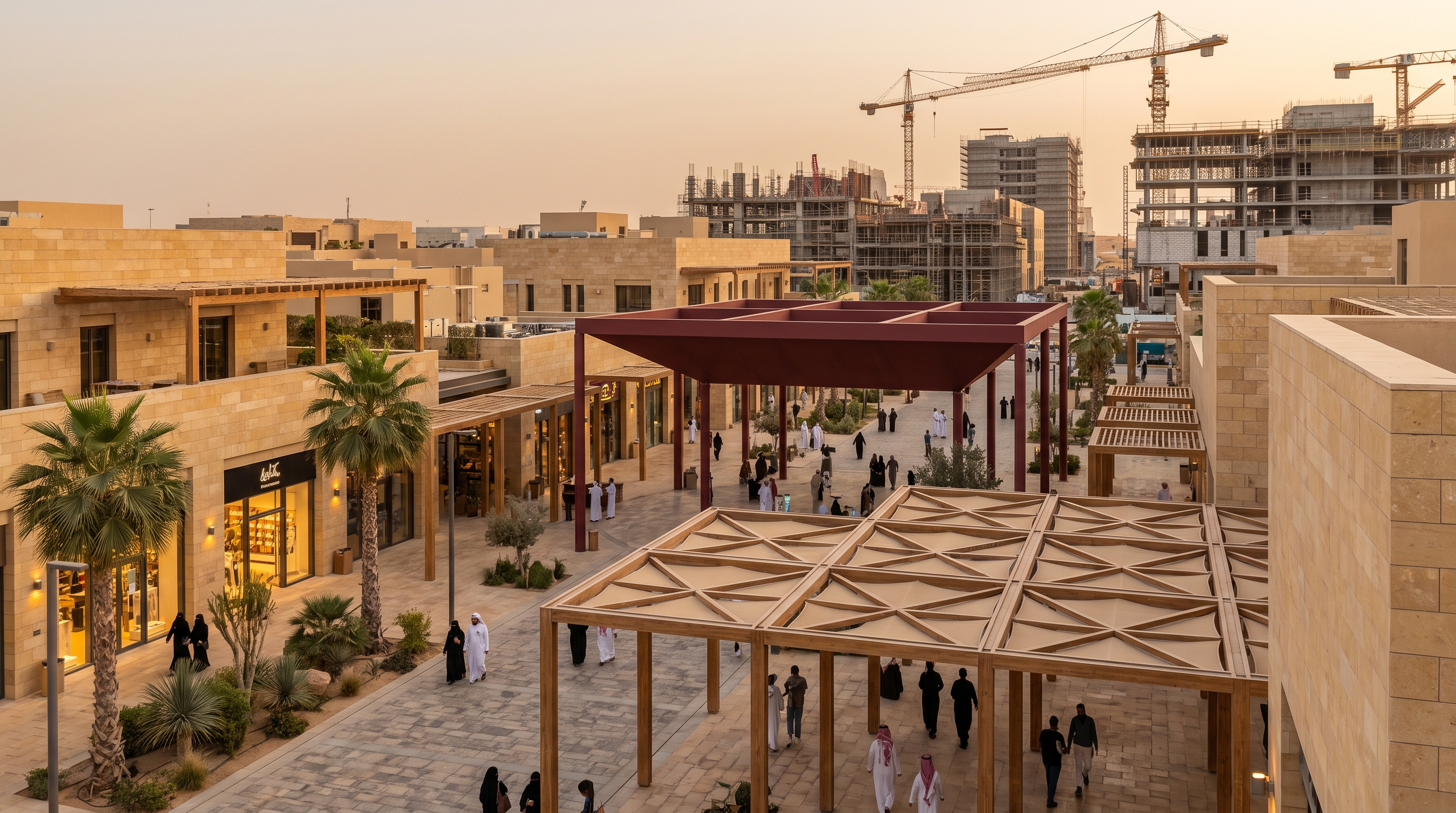
Early place activation does not mean staging temporary events on an unprepared site. It begins with an ordinary day: how do people arrive, where do they walk in the heat, can a visitor understand parking, seating and services, and is there a reason to return when no event is happening? In an early phase, a shaded plaza, a short walk connected to active frontage, a modest play area, a café or a daily service, and a restrained operating programme may create more value than a large isolated building surrounded by active construction.
Activation must work with the development cycle rather than compete with it. Define construction zones, worker routes, hoarding, wayfinding, delivery hours and public areas from the outset. Then keep an operating and activation budget separate from the advertising budget. Advertising can secure the first visit; place quality, service and programming determine repeat use. Before selecting an activity, ask whether it reaches a future revenue audience, whether it can operate safely without disrupting construction, and whether it leaves a useful legacy after it ends.
4. Sequence uses by their ability to stabilise value, not by their visual appeal on plan
There is no universal rule that retail must precede housing, or that offices must wait for the wider district to mature. The task is to understand the role each use plays within a phase. Some uses create daily movement. Some generate early liquidity through sales. Others need residential or institutional mass before they become leaseable. A simple matrix can compare each use by absorption speed, early payment value, infrastructure demand, operating sensitivity, ability to attract complementary uses and vacancy exposure.
The masterplan also needs protected flexibility. Do not lock early buildings into structural grids, facades, parking arrangements or servicing systems that make a later change of use expensive or impossible. Plan depths, heights, utilities, loading points and pedestrian connections so selected units can respond to observed demand. This does not mean designing every building to one generic standard. It means identifying where adaptability earns its cost, especially in retail edges, ground floors and buildings whose role may change as the destination matures.
5. Use explicit decision gates instead of automatic progression to the next phase
Strong phasing is governed by decision gates, not merely by opening dates. Before committing to the next stage, review commercial and operational performance together: reservations or sales, lead quality, leasing velocity, collections, visitor movement, tenant feedback, utility reliability and the cost of operating public realm. A busy weekend is not enough if weekday use is weak or tenants are not achieving sales levels that support their continued operation.
Set out three routes from the beginning: a base route, an acceleration route when demand is proven, and a correction route when absorption slows or costs rise. The correction route may defer a non-critical building, rebalance the use mix, extend interim uses or prioritise infrastructure that serves several parcels. This prevents the financial plan from relying on a single assumption. Good executive decisions do not ignore early signals; they convert them into controlled changes in capital allocation, product and timetable.
6. Turn phasing strategy into an executable governance system
A real estate masterplan phasing strategy needs one decision owner who can bring development, finance, design, leasing and operations into the same room, with clear escalation authority. Establish a regular review dashboard that compares approved assumptions with reality: committed cost, actual spend, available liquidity, construction progress, tenant commitments, use patterns and risks that could prevent a credible opening. The aim is not more reporting. It is to stop separate teams from making sensible local decisions that weaken the phase as one product.
Start with four practical outputs: a phasing plan showing assets and shared infrastructure in each release; a cash-flow model tied to decision triggers; a leasing and activation plan that matures with handover; and a risk register naming an owner, action and review date. Then test phase one through a virtual site walk as a resident, visitor, tenant and operator. If those users cannot understand arrival, service and everyday value before opening, the issue is not marketing. The issue is the definition of the phase itself.