
1. Start with a testable proposition, not a wish list
A strong first phase answers one precise question: what must be proven before the developer commits materially more capital? The answer may concern whether a location can attract a defined buyer segment, whether the market will pay for a differentiated residential product, or whether retail can trade beyond weekend peaks. Without that proposition, phase one becomes a collection of homes, shops and amenities included because they appear in the masterplan, not because the market needs them now.
The development team should state its proposition in operational terms: “This phase will demonstrate that the site can absorb a defined product for a defined audience within an acceptable period, while a limited commercial offer supports the resident experience.” Internal decision thresholds should then connect product, price, pace and demand sources. The phase either earns the right to expand, or it produces evidence to change the next release.
2. Treat absorption as buyer behaviour, not a market headline
Absorption planning should not begin with a citywide average price. Demand within Saudi cities changes sharply by access, household pattern, proximity to employment, buyer financing and the substitutes that customers can actually choose. Define a credible competitive catchment instead: where does the prospective customer live, rent or buy today, and which alternatives will be compared with the project during its sales or leasing window?
Break demand into addressable segments: an end user seeking space and daily convenience; an investor focused on income and operations; an employer seeking proximity to staff; or a retailer seeking the right visitor pattern. Test each segment’s price sensitivity, preferred unit size, delivery timing and appetite for off-plan versus completed property. The useful question is not “Is there demand?” It is “How much of this product, at this price and in this location, can this customer commit to within this period?”
3. Choose an opening product that gives the place a clear identity
The opening phase should be legible from the road, on a first visit and at the purchase decision. A mixed-use masterplan does not require every use to open at once. A destination may start with a compelling residential offer, a modest public realm and everyday commercial services, while uses dependent on resident density or visitor flow wait. Opening excessive office or restaurant space before there is a user base does not create activity; it often creates costly vacancy.
Select one or two anchor products capable of carrying the phase’s story: a residential community linked to an employment corridor, a walkable district around a shaded public space, or hospitality and experience-led space in a location with established visitors. Build supporting components around that proposition. Amenities are not a marketing checklist; they must help acquire customers or make daily living and working easier. Ask whether removing an element would materially reduce demand or damage the day-to-day experience. If not, it may belong in a later release.
4. Sequence infrastructure and public realm around customer experience and operations
A common phasing error is loading phase one with the cost of a full network before the product has proved itself. This does not mean deferring anything required for safety, operations or authority approvals. It means distinguishing infrastructure without which the phase cannot operate from capacity serving future releases that can be designed now and built later. Utilities, roads, parking, drainage and connections should show how the network expands without disruptive rework for early occupants.
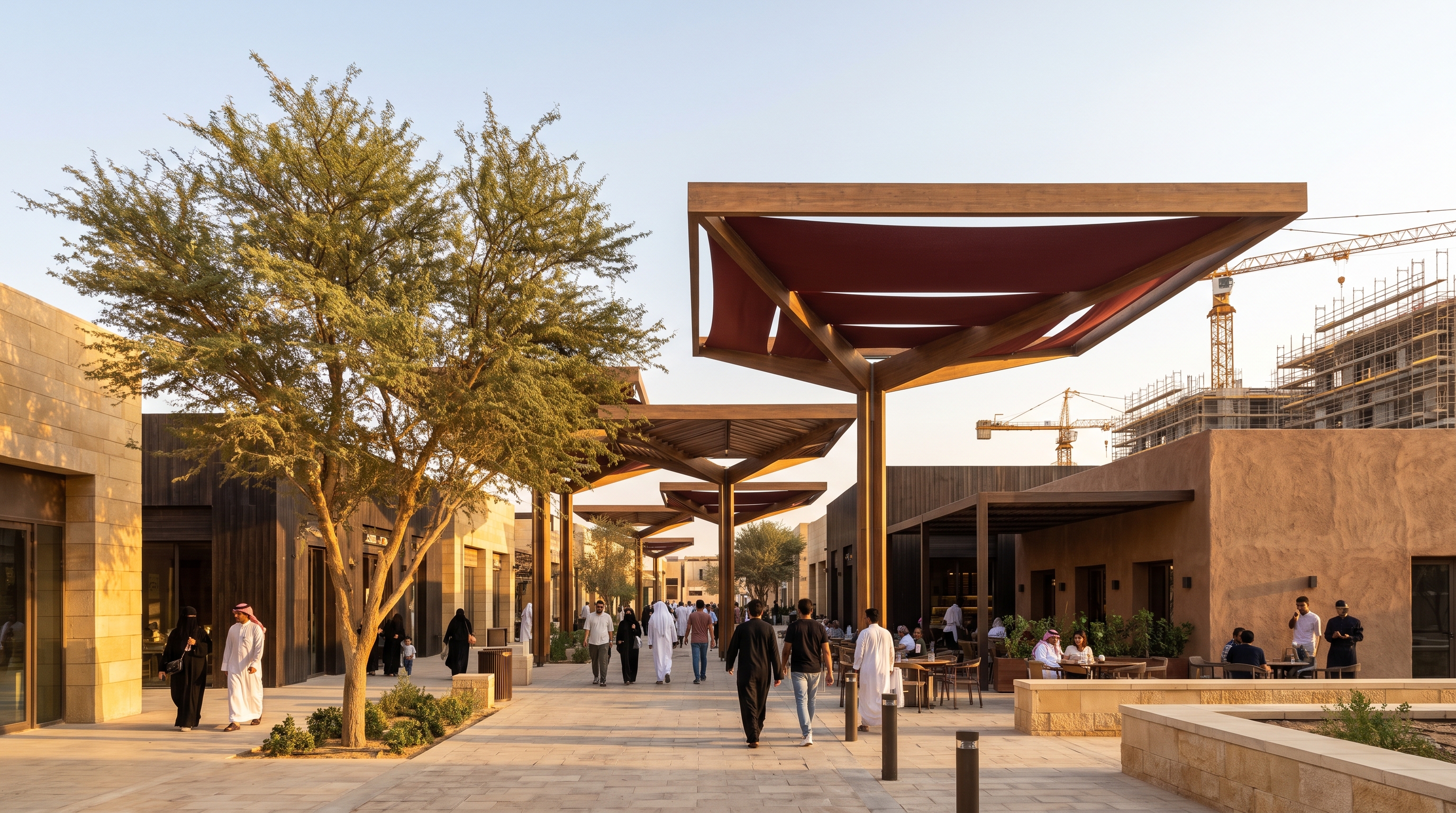
At the same time, the project cannot read as a construction site selling a distant promise. The customer-facing area needs a finished standard of climate-appropriate planting, shade, lighting, wayfinding, arrivals, pavements and building edges. In Saudi conditions, thermal comfort, walking distance and the transition from car to building are not cosmetic matters. They affect repeat visitation, dwell time and the reputation the place develops in its first operating months.
5. Turn risk reduction into measurable decision gates
Real estate investment risk reduction does not come from assuming the best case. It comes from decision gates that prevent automatic expansion. Before launch, define sales or leasing indicators, customer acquisition cost, infrastructure progress, operational readiness and recurring feedback from customers and brokers. After launch, monitor pace as well as totals: is demand coming from the intended segment? Are objections repeatedly about price, unit size or access? Is performance dependent on temporary discounts that weaken phase economics?
The investment committee needs three explicit paths: expand as planned when the proposition is confirmed; adjust product, pricing or release sequence when signals are mixed; or pause and reassess when the market contradicts the core proposition. A pause is not a failure. Phase one exists so that changes cost less than correcting a large built commitment. A documented stop decision protects capital and improves the conversation between development, finance, sales and operations.
6. Design phase one as a platform for the next release, not an isolated island
A viability-proving first phase should leave the project with better options, not new constraints. Review future arrivals, street extensions, service locations, plot edges, later building frontages and pedestrian routes from the outset. A temporary parking field, sales centre or low-density parcel should not obstruct the most valuable part of the plan later. Early customers should also understand what may change around them, without the developer making detailed promises that have not been properly released.
The next step is practical: create a one-page decision brief for each release covering the demand proposition, product, delivery scope, early irreversible investment, success measures and a defined review date. Test it with design, cost, sales and operations teams because each sees risk differently. When those groups agree on what phase one is meant to prove, Saudi real estate phasing strategy becomes a tool for capital discipline and credible placemaking, rather than a construction timetable.