
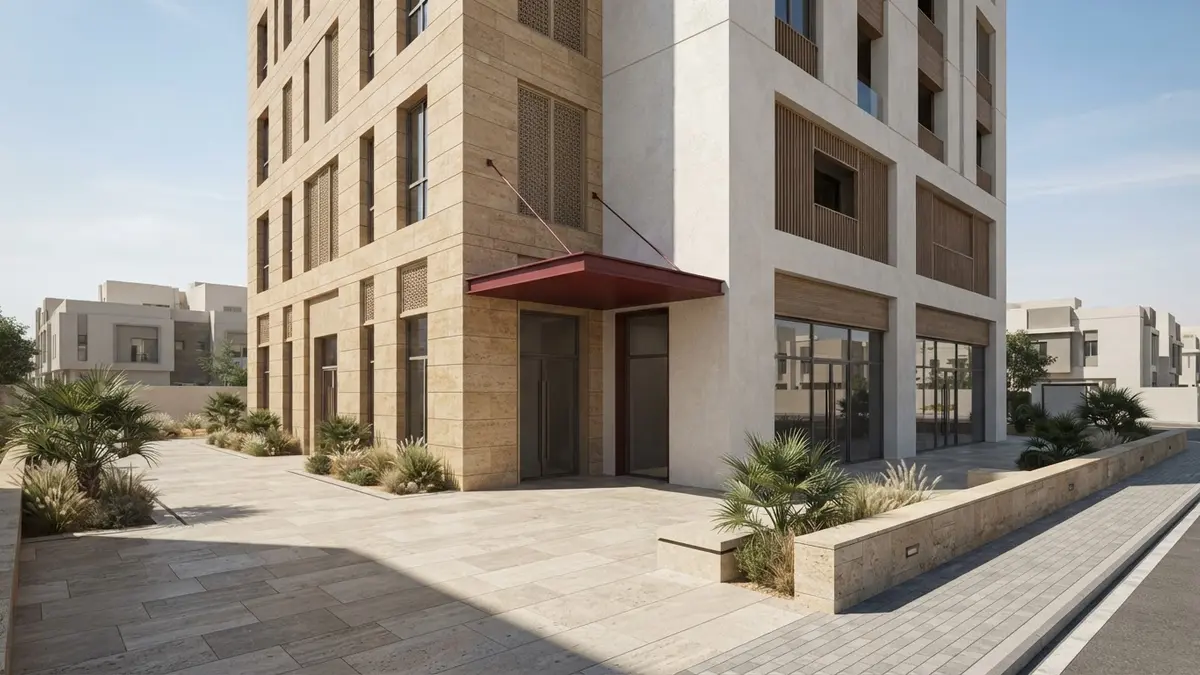
The Friction Point: The Traditional Conflict Between Vision and Feasibility
The tension between master plan vision and sub-developer execution is one of the most critical friction points in Saudi Arabia’s current real estate boom. While master developers seek to protect the long-term value and aesthetic integrity of their masterplans, sub-developers operate under tight margins, strict construction timelines, and volatile material costs. When design codes are treated as rigid, academic doctrines rather than dynamic commercial frameworks, they inevitably lead to project delays, disputes, and compromised feasibility.
To build sustainable, high-quality urban environments in Riyadh, Jeddah, or the Eastern Province, we must redefine the relationship between these two tiers of development. A masterplan’s success is not measured by the beauty of its initial rendering, but by the physical realization of its parcels. If sub-developers cannot achieve their targeted internal rate of return (IRR) due to overly restrictive architectural mandates, the masterplan remains unbuilt or suffers from poor execution due to uncoordinated cost-cutting.
The Cost of Rigid Design Codes: Hidden Penalties for Both Tiers
Overly prescriptive design codes often impose hidden financial penalties on sub-developers. Requirements such as specific, non-standard stone cladding, complex structural cantilevers, or highly restrictive building envelopes can inflate construction costs by 20% to 35% without adding proportional market value. Furthermore, lengthy multi-stage design review processes delay excavation and construction, exposing sub-developers to rising interest rates and shifting market demands.
When a design code fails to align with local supply chains and construction capabilities, it forces sub-developers to seek constant variances or compromise on material quality. The result is a fragmented streetscape that satisfies neither the master developer’s aesthetic aspirations nor the sub-developer’s commercial objectives. The true cost of an impractical design code is a stalled masterplan where parcels remain vacant because the cost of compliance outweighs the potential return on investment.
The "Performance-Based" Alternative: Shifting from Prescriptive to Outcome-Driven
The solution lies in transitioning from prescriptive design codes to performance-based guidelines. Prescriptive codes dictate the exact "how" (e.g., mandating a specific cladding material at a precise percentage), whereas performance-based codes define the desired "what" and "why" (e.g., establishing thermal performance targets and a cohesive visual character that reflects local identity, while leaving material selection flexible based on cost and availability).
This shift empowers sub-developers and their architects to innovate, optimize costs, and leverage modern construction methods like precast concrete, modular systems, and local alternative materials. By focusing on performance outcomes—such as solar shading, active street frontages, and pedestrian comfort—master developers can secure high-quality urban environments while allowing sub-developers the flexibility to adapt to market realities and budget constraints.
A Framework for Balance: Three Levels of Design Control
Balancing architectural quality and financial feasibility requires a structured, three-tiered framework. First, establish "Non-Negotiable Urban Rules" that govern the public-private interface, such as building setbacks, active ground floors, parking access, and maximum heights. These rules ensure the masterplan’s spatial experience and pedestrian connectivity remain intact, regardless of individual parcel designs.
Second, introduce "Flexible Architectural Guidelines" for building envelopes and facades. Instead of mandating expensive materials, define a menu of approved material palettes, textures, and performance benchmarks. Third, implement a "Fast-Track Incentive Program" where sub-developers who adopt sustainable technologies, off-site manufacturing, or exceptional public realm integrations receive accelerated design reviews or minor density bonuses.
Streamlining the Approval Workflow: From Gatekeeper to Partner
An optimized design review process should act as a development enabler rather than an administrative gatekeeper. Master developers must establish clear, transparent, and digitally enabled workflows. A two-stage review system—comprising a conceptual alignment workshop and a final compliance sign-off—prevents sub-developers from investing heavily in detailed engineering before verifying that their architectural direction aligns with the masterplan's vision.
To ensure objectivity, the design review committee should include independent commercial real estate experts alongside urban designers. This ensures that every feedback comment is evaluated not only for its aesthetic merit but also for its impact on buildability, cost, and market absorption. When sub-developers view the master developer's review team as collaborative partners, compliance rates increase, and design cycles are shortened by up to 50%.
Self-Qualification & Next Steps: Turning Codes into Investment Assets
Master developers who fail to balance design control with sub-developer feasibility risk facing stalled parcels, legal disputes, and a fragmented development that damages their brand reputation. If your current design codes are causing friction, delaying land handovers, or driving away institutional sub-developers, it is time to reassess your framework. A rigid code that prevents construction is far more damaging than a flexible code that guides high-quality execution.
At Asred, we specialize in bridging the gap between masterplan vision, regulatory compliance, and commercial reality in the Saudi market. We help master developers audit, optimize, and manage their design codes to ensure they protect public realm quality while remaining highly attractive to sub-developers. Contact our advisory team today for a diagnostic review of your masterplan’s design guidelines and approval workflows.